What is a jharokha?
A jharokha is an enclosed, overhanging window or balcony, often carved in stone or wood, that projects from the wall of a building. Jharokhas are a striking feature of Rajput and Mughal architecture and can be seen on palaces, forts and havelis (traditional mansions) across Rajasthan and north India.
Their carved screens let in light and air, and made it possible to look out onto the street or courtyard without being seen. The Hawa Mahal in Jaipur is one of the best-known examples, with hundreds of small jharokha windows across its front.
Jharokha mirror frames
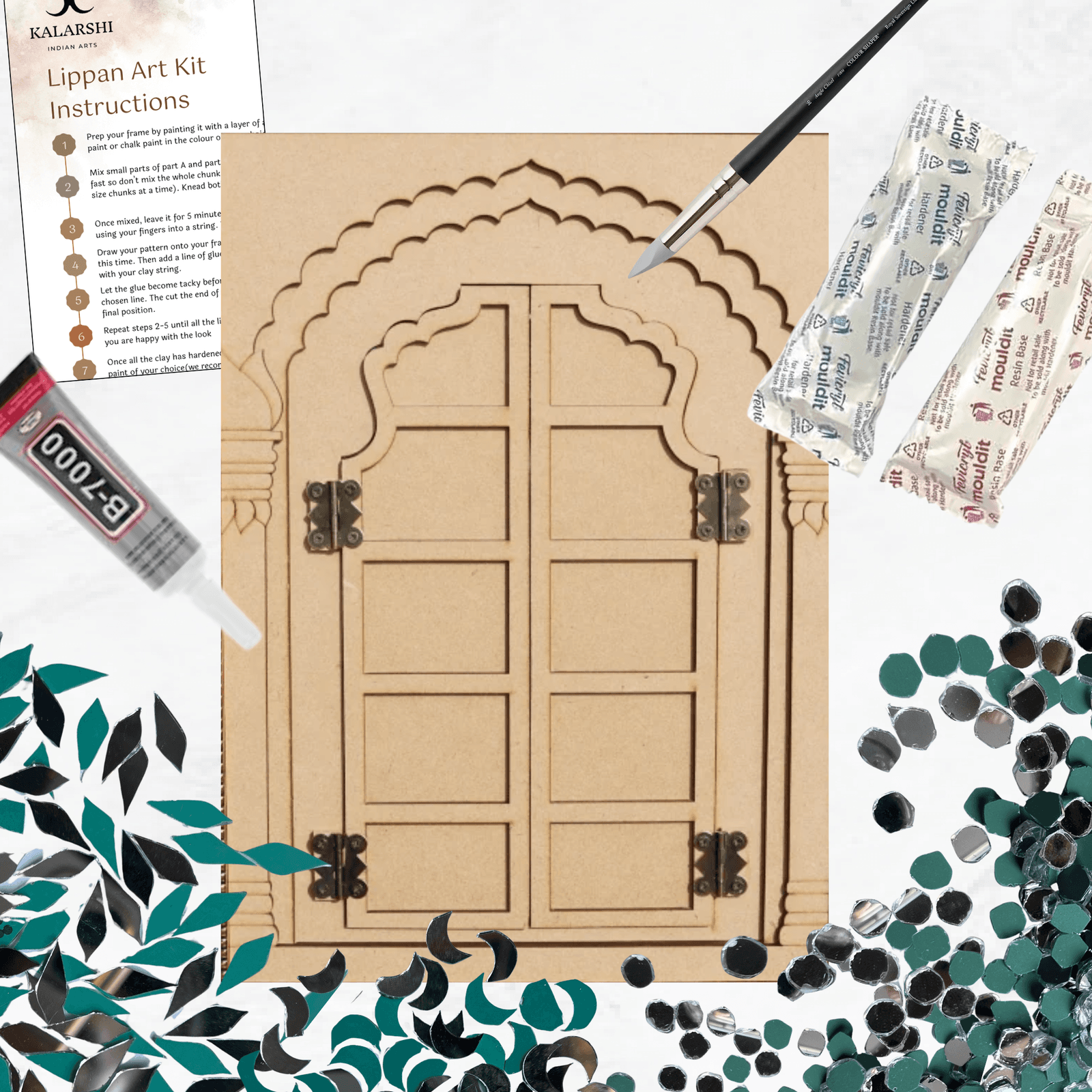
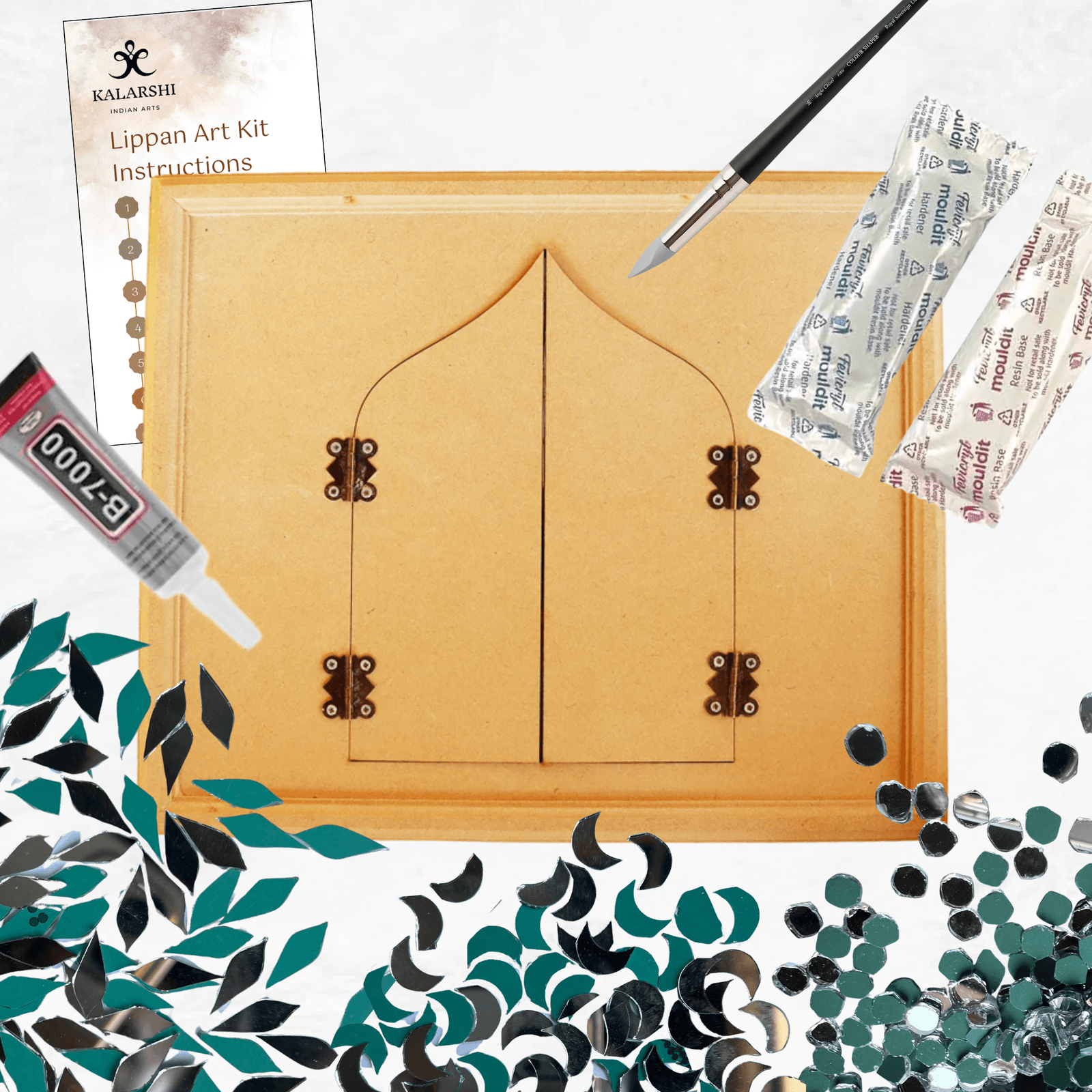
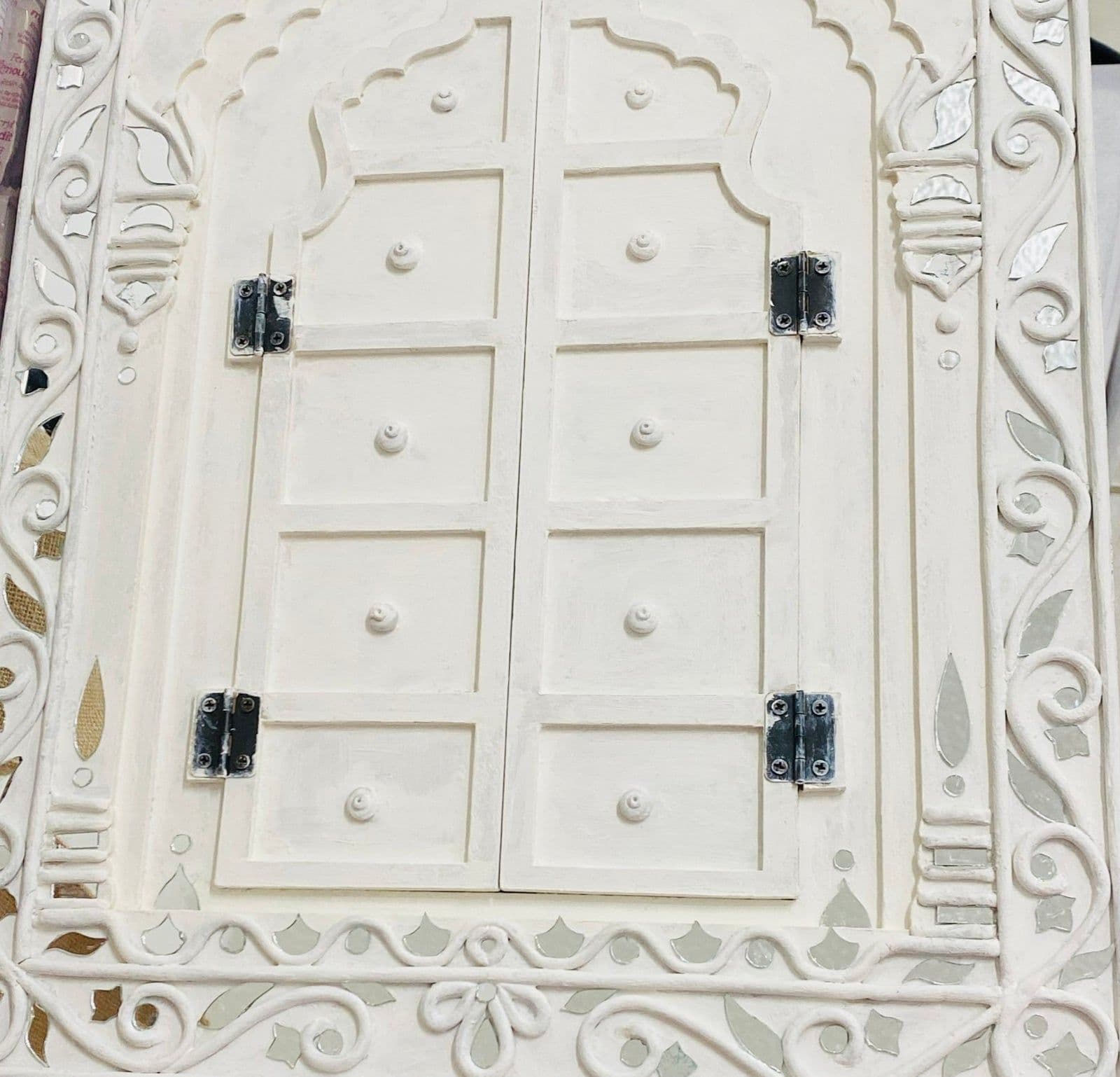
A Jharokha mirror frame borrows the arched outline and doors of these windows. Behind the doors sits a mirror, and the frame is decorated in Lippan style with raised clay patterns and small mirror pieces, bringing together the architecture of Rajasthan and the mud and mirror work of Kutch, Gujarat.
How to decorate a Jharokha frame
- Plan your pattern around the arch, the doors and the border
- Roll clay into thin coils and press them along your lines
- Set mirrors into the clay or fix them with glue
- Add dots and details with a dotting and shaping tool
- Leave it to dry fully before hanging
Our Jharokha mirror kits
Each Kalarshi Jharokha kit includes a 15 mm thick MDF frame with doors and hinges, a central mirror, mirrors in 6 different shapes, clay, glue, a dotting and shaping tool and step-by-step instructions. Choose from several designs, including arched and floral arch frames. The kits suit all levels, and you can also make a Jharokha frame at one of our Lippan workshops.