What is Lippan art?
Lippan art, also known as Lippan kaam or mud and mirror work, is a traditional mural art form from the Kutch region of Gujarat, in western India. Patterns are built up in raised lines of clay and set with small pieces of mirror, so the finished piece shimmers as the light moves across it.
Where it comes from
In the villages of Kutch, Lippan work was traditionally made by hand on the walls of homes, including the round mud houses known as bhungas. The clay was mixed with dung to make it stronger, and the mirrors reflected daylight and lamplight, brightening the inside of the home. Communities including the Rabari, Mutwa and Meghwal each have their own styles and motifs.
Traditional designs
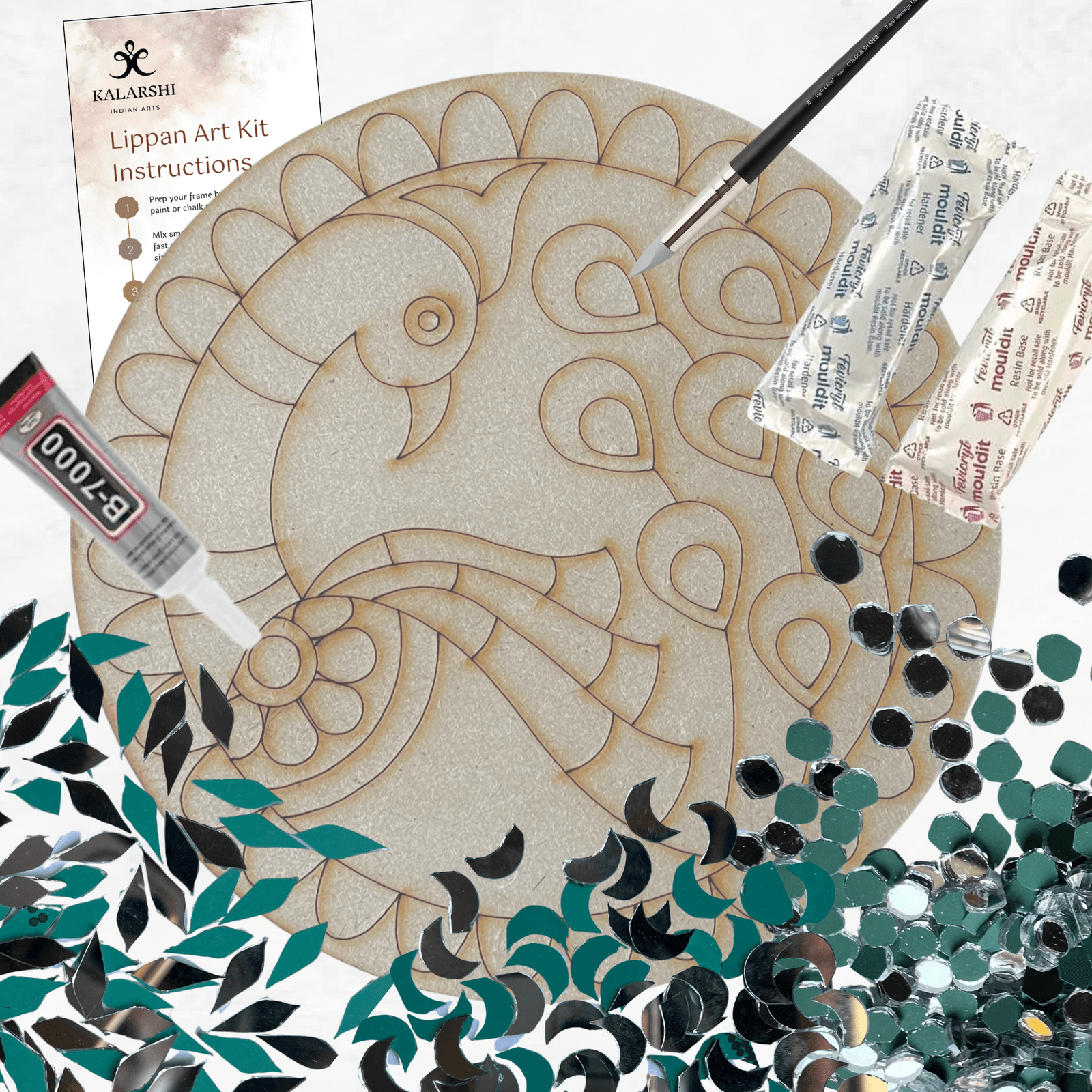
Common designs include geometric patterns, flowers, trees, peacocks, camels, elephants and mandalas.
How Lippan art is made today
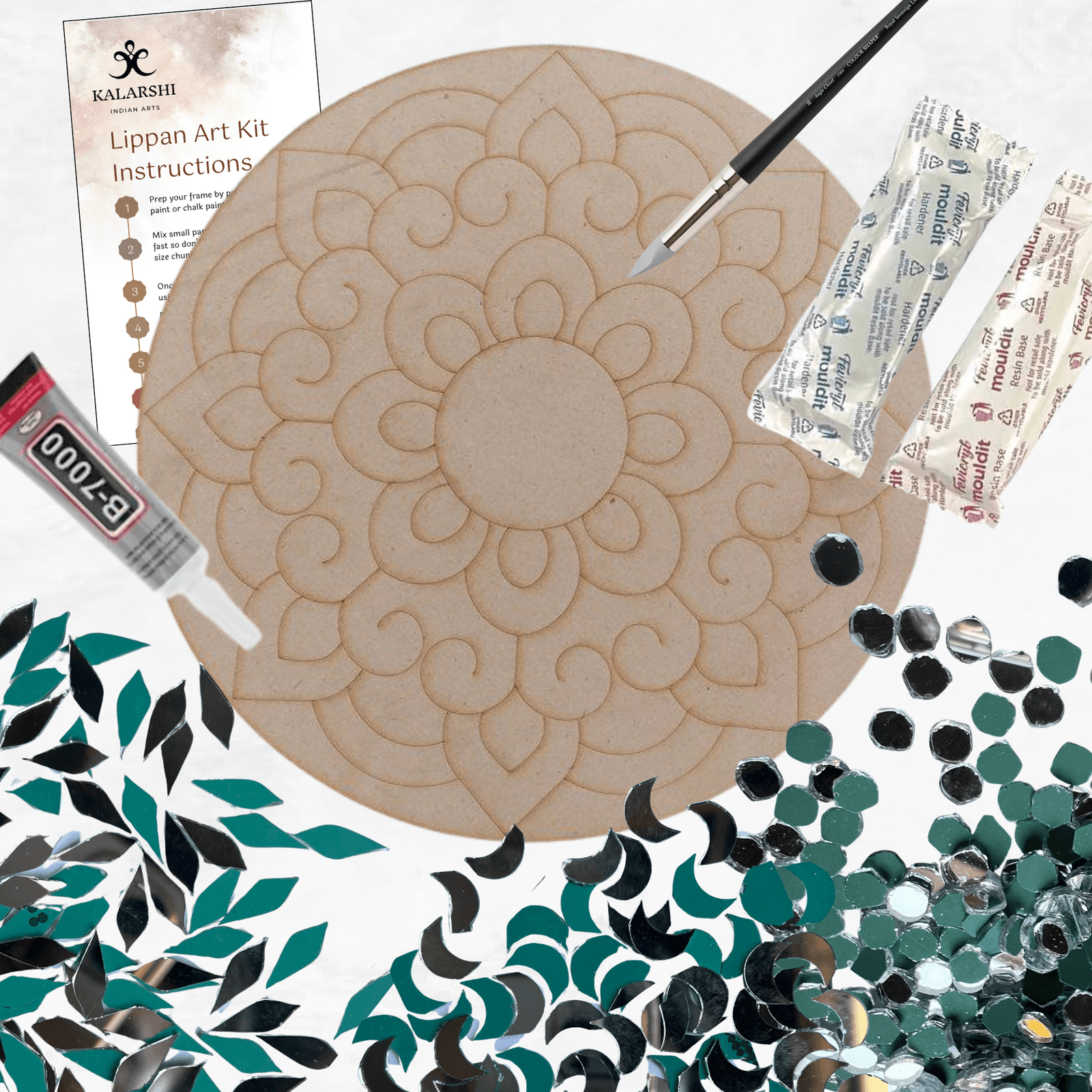
Modern Lippan pieces are usually made on a wooden or MDF board rather than a wall, using air-dry clay, craft glue and ready-cut mirrors.
- Draw or trace the design onto the board
- Roll the clay into thin coils and press them along the lines to make raised outlines
- Fix mirrors into the spaces between the clay lines
- Add dots and small details with a shaping tool
- Leave the piece to dry fully before hanging it
The clay can be left natural or painted once it is dry.
Make Lippan art with Kalarshi
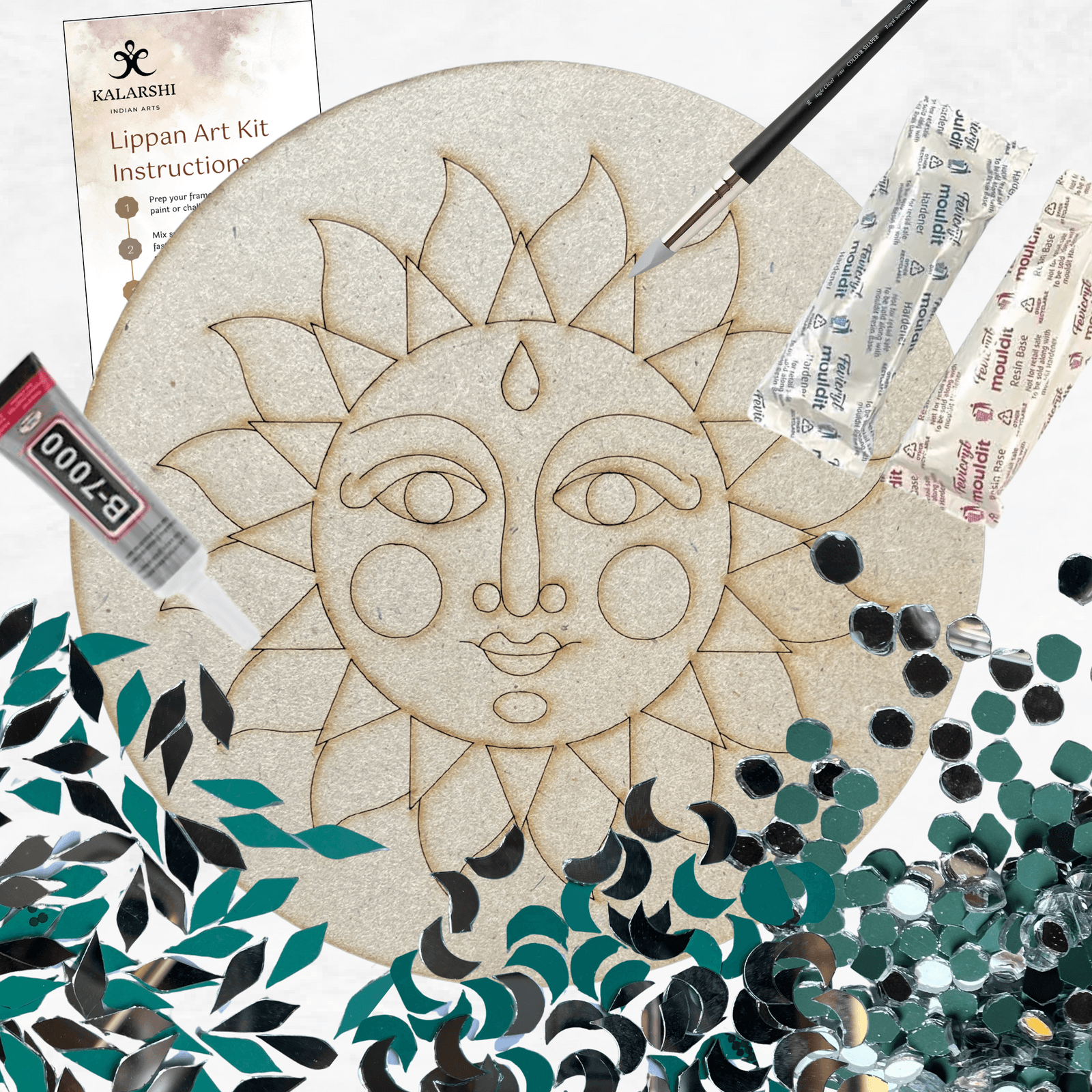
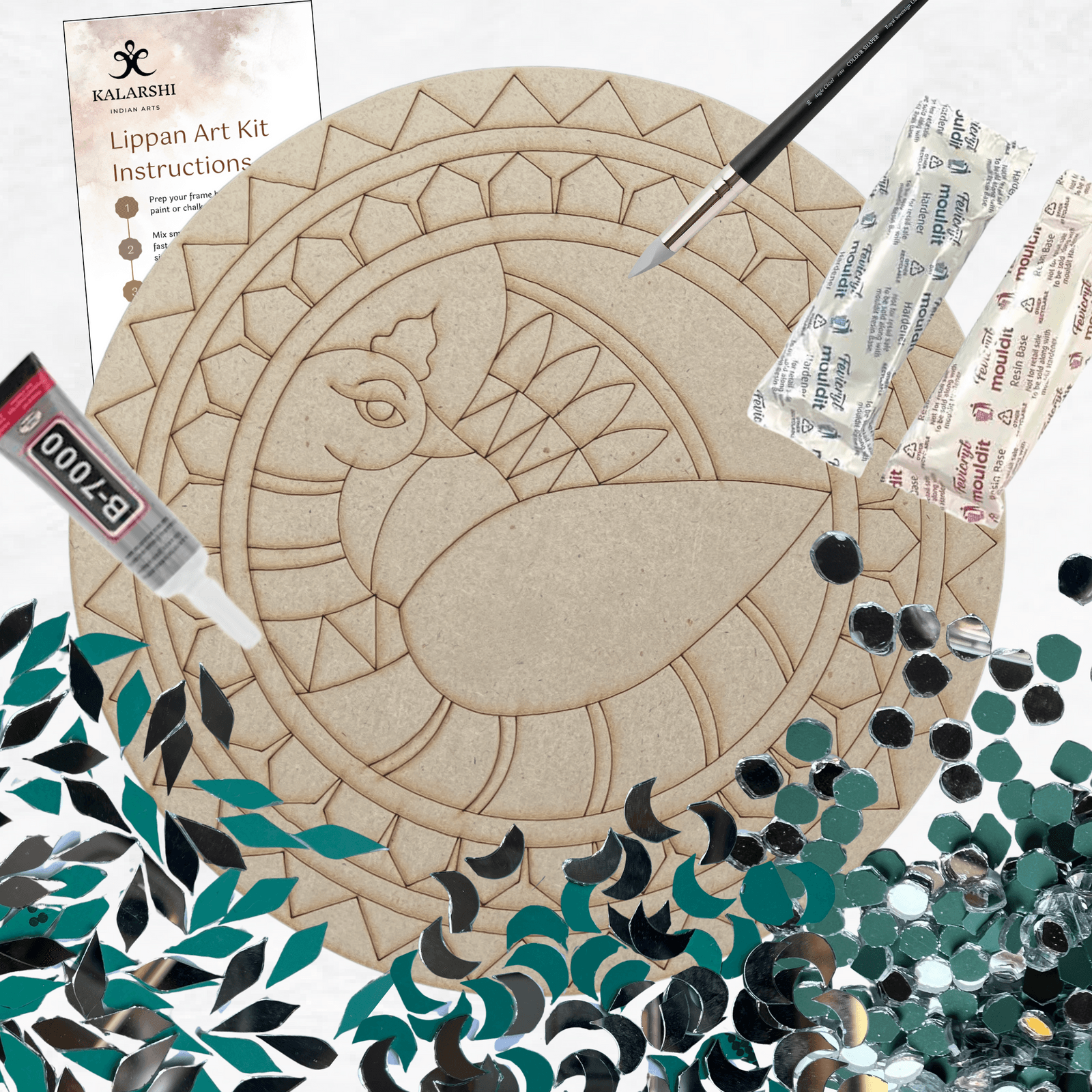
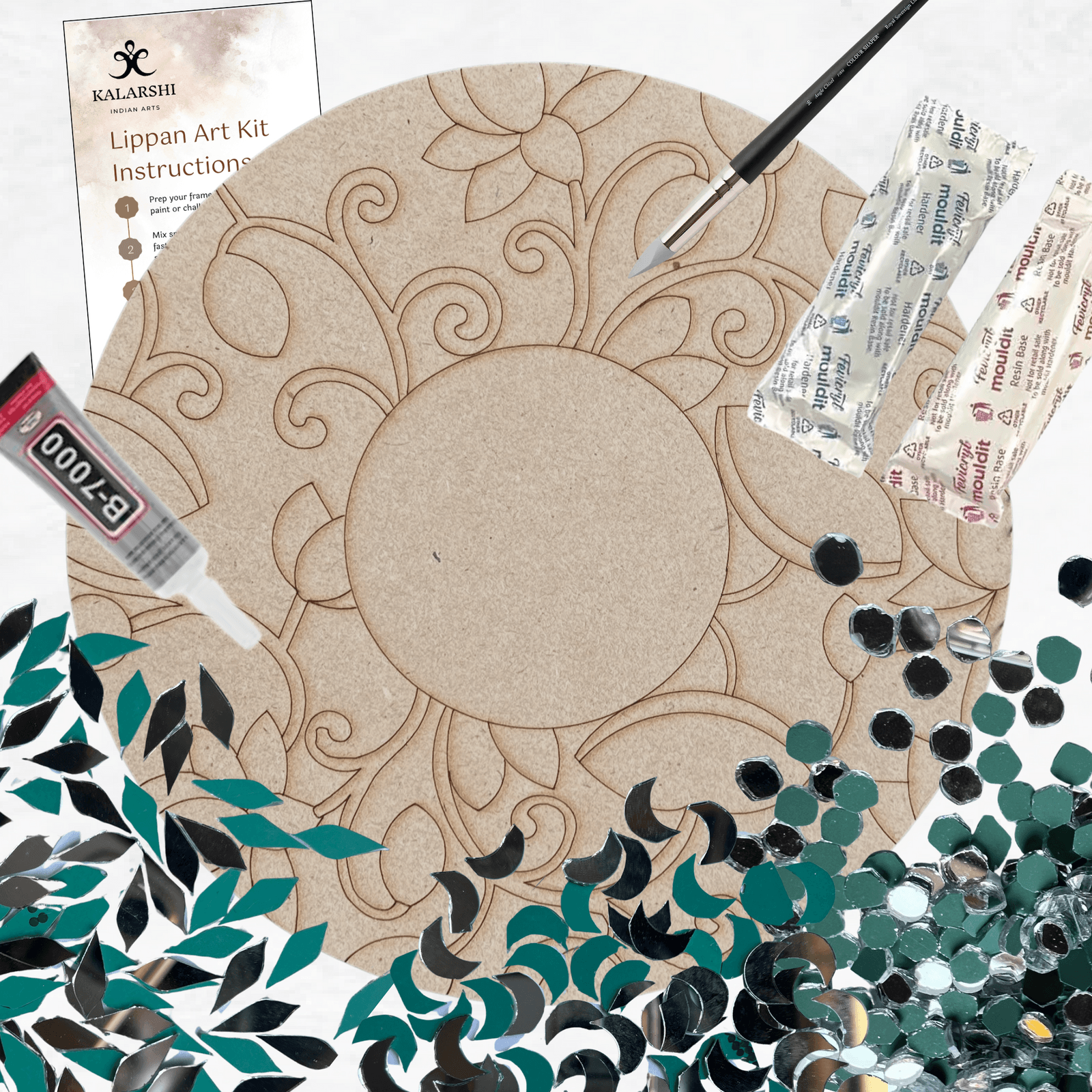
Our Lippan art kits come with a round MDF board marked with the design, clay, glue, a shaping tool, mirrors and step-by-step instructions, and suit all levels. We also run hands-on Lippan workshops for workplaces, schools and private groups across the UK, where you can make a small hanging, an 8 inch round or a Jharokha frame with opening doors.